Projects
Case studies in security & automation.
A closer look at real systems — how a security weakness was found and responsibly reported, and how an automation platform was engineered to be auditable and dependable.
Projects
A closer look at real systems — how a security weakness was found and responsibly reported, and how an automation platform was engineered to be auditable and dependable.
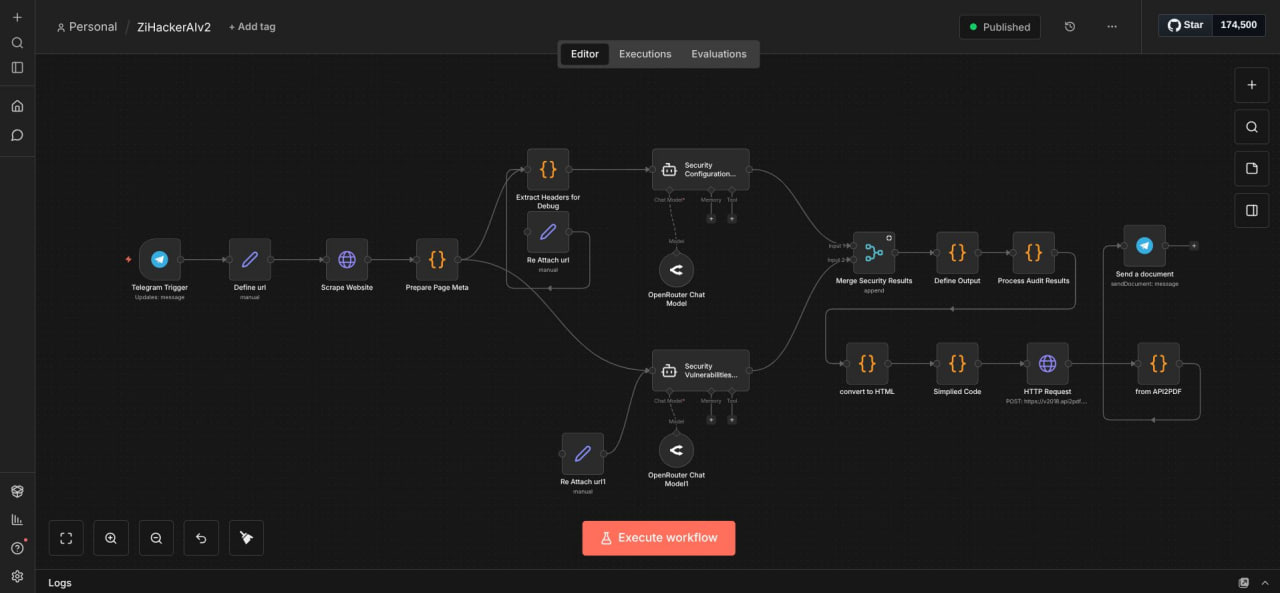
ZIHackerv2.0 is an intelligent Telegram and n8n-based security agent designed to automate website vulnerability assessments. It performs parallel audits and delivers structured PDF reports with actionable insights to improve web security.
Overview
ZIHackerv2.0 represents a practical integration of AI automation into cybersecurity workflows. By combining Telegram for interaction and n8n for orchestration, the system allows users to submit a website URL and receive a comprehensive security analysis within seconds. It evaluates key areas such as security headers, configuration weaknesses, client-side risks, and common vulnerabilities, then generates a detailed report with a security grade, prioritized findings, and recommended fixes. This project demonstrates how automation can significantly reduce manual effort while improving the speed and efficiency of security assessments.
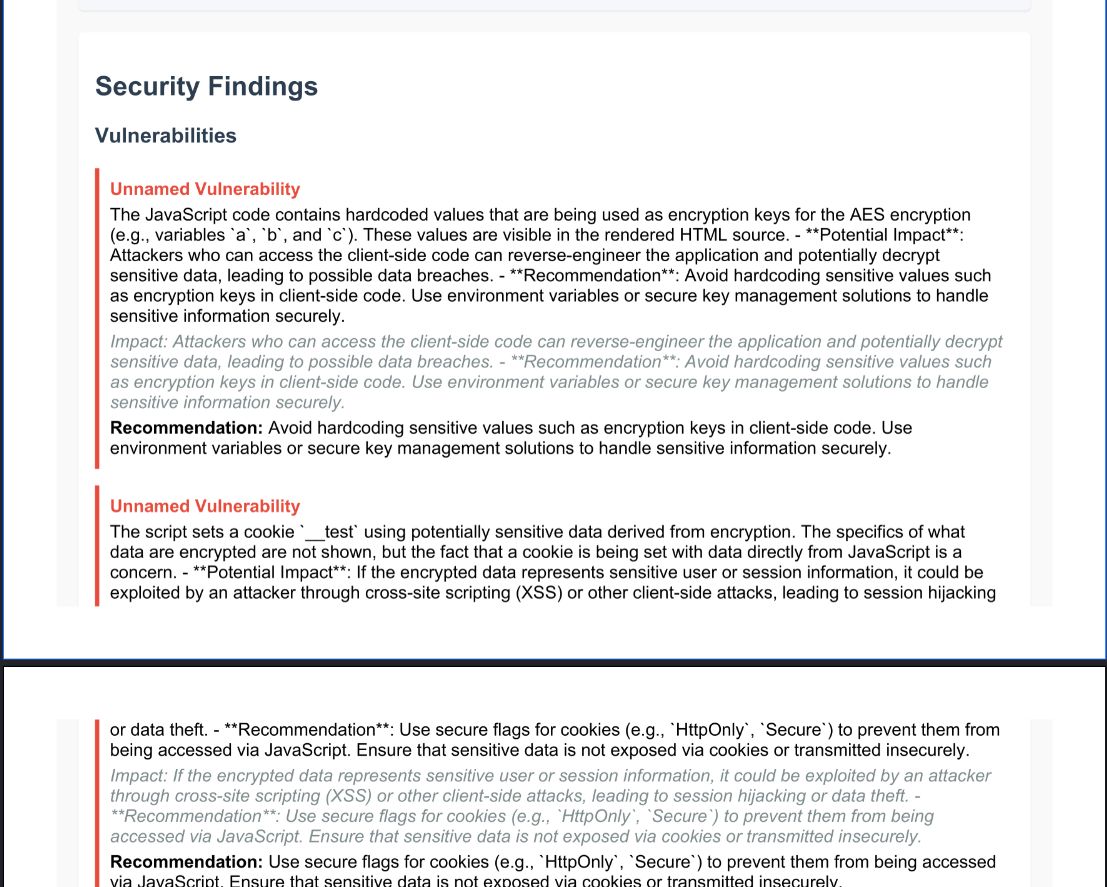
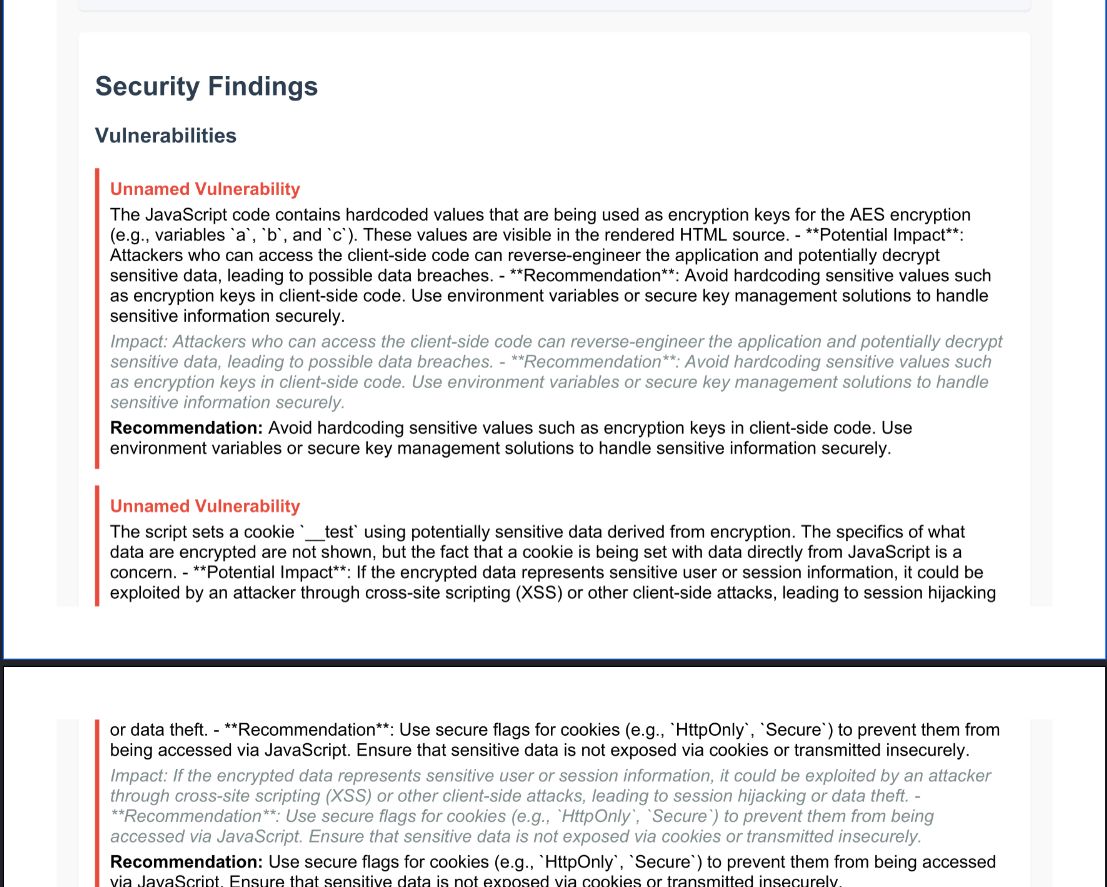
This vulnerability occurs when sensitive values, such as encryption keys, are directly written inside JavaScript code that runs in the user’s browser. Since client-side code is fully accessible through the browser (e.g., by viewing the page source or using developer tools), attackers can easily extract these hardcoded keys and use them to reverse-engineer the application. This can lead to the decryption of sensitive data and potential data breaches. To mitigate this risk, sensitive information like encryption keys should never be stored in client-side code. Instead, they should be securely managed using server-side environment variables or dedicated key management systems to ensure proper protection.
Screens, diagrams, and artifacts from the work.